
Pellet Manufacturing In India: Process, Benefits & Applications
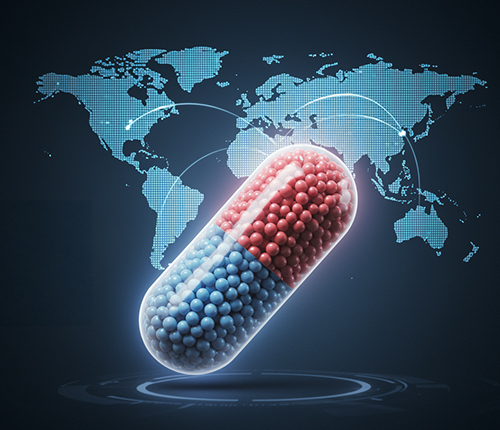
Pellet Manufacturing in India
The manufacture of pharmaceutical pellets in India is a rapidly expanding part of the drug delivery industry due to the growing interest in controlled-release preparations, combination preparations, and dosage forms that are easy-to-take by patients. Pellets are small, spherical particles that are free-flowing, and are commonly used in capsules, tablets, and sachets to administer the correct doses of active pharmaceutical ingredients (APIs).
India has emerged as a major production and export hub of pellets with a high number of trained workers, low production costs, and compliance with international rules and regulations.
About Srinag Pharma
Since 2017, Srinag Pharma has been a leading manufacturing company of pharmaceutical pellets and has a GMP-certified facility with state of the art in Hyderabad, India. The company is involved in sophisticated production of pellets, micro-pellets and granules, which have a global clientele.
We are most effective at combining scientific quality and innovative technologies such as the development of contract forms, research and development, and the overall development of analytical and regulatory support. With an emphasis on developing sophisticated generics and modified-release formulations, we provide a versatile business model to include bulk pellet delivery to commercialization of joint ventures. At the moment we are present in 25-plus countries and have four accreditations under our belt.
What Are Pharmaceutical Pellets?
Pharmaceutical pellets are usually between 0.5–1.5 mm in diameter and are made to offer homogenous distribution of drugs as well as predictable drug release profiles. Multi-particulate systems, which are pellets, are the opposite of single-unit dosage forms, and are distributed more uniformly in the gastrointestinal tract and decrease the variability of drug absorption.
Pellet Manufacturing Process
Pellet manufacturing is an operation that entails the compressing of raw materials into small, compact cylindrical shaped pellets through heat, pressure and a die. It enhances handling, storage and combustion efficiency of the materials.
Grinding:
Raw material is ground into a fine powder or uniform particles.
Drying:
The content of moisture is lowered to allow binding.
Conditioning:
Steam or water can be added in order to make the material soft and activate natural binders.
Pelletizing:
The material undergoes conditioning and is pressed through a rotating die using rollers to create hot and compressed pellets.
Cooling:
Pellets are cooled in the air to harden and dry them.
Screening:
Screening takes place and the dust or broken pellets are recycled.
Packaging or Storage:
Finished pellets are stored in silos or bagged.
Benefits of Pellet Manufacturing
The pellet based systems also present a number of benefits over traditional tablets and capsules and are therefore gaining popularity among pharmaceutical companies.
Better Control over Drug Release:
Pellets enable fine control of release profiles — immediate, delayed or sustained — in the same dosage form.
Increased Bioavailability:
Homogenous distribution in the gastrointestinal tract enhances the absorption of drugs and decreases variability.
Less Risk of Dose Dumping:
Multi-particulate systems minimize the risk of a sudden release of great amounts of drug.
Improved Patient Compliance:
Swallable and flexible dosage.
Combination Therapy Capability:
It is possible to combine different pellets in a single capsule to provide many drugs or release profiles.
Lower Gastrointestinal Irritation:
Even distribution minimizes localized irritation in contrast to unit dosage forms.
Applications of Pharmaceutical Pellets
The pellets are common in various therapeutic fields and dosing forms.
Common Dosage Forms
Capsules (single or multi-pellet systems)
Multiple Unit Pellet System (MUPS) pills.
Sachets and oral suspensions.
Therapeutic Applications
Gastrointestinal drugs
Cardiovascular medications
Antibiotics and anti-infectives
Diabetes management drugs
Nutraceuticals and supplements
They find use in chronic disease treatment, where a slow release of drugs is necessary.
Why India Is a Global Hub for Pellet Manufacturing
India has been able to establish itself as a major producer of pellets because of a number of strategic benefits:
Cost Effectiveness:
The manufacturing and labor costs are reduced relative to those in the Western markets without affecting the quality.
Qualified Labor:
Well-trained scientists, formulation specialists, and engineers that have worked in sophisticated drug delivery systems.
Regulatory Compliance:
Most Indian manufacturers are under WHO-GMP, US FDA and EU GMP certifications depending on the area of operation.
Well-Developed Infrastructure:
Processing plants with up-to-date equipment.
Challenges in Pellet Manufacturing
Although it has some benefits, the process of pellet manufacturing is characterized by some complexities:
Intensive startup cost of specialized equipment.
Sensitivity to processes, demanding strict control of parameters.
R&D-to-commercial production scale-up problems.
Lack of suitability to some APIs.
Key Considerations for Buyers
Indian suppliers of pellets should be vetted by pharma buyers in search of pellets. Here are some factors that need due consideration:
Quality Control
Particle size, uniformity and roundness.
Uniform drug content.
Established dissolution profiles.
Regulatory Documentation
Certificate of Analysis (CoA)
Stability data
Certifications of compliance
Technical Expertise & Production Capability
Familiarity with different pelletization methods.
Customized formulations.
Commercial production scalability.
Trustworthy supply chain.
The Future of Pellet Manufacturing
Pellet technology is still evolving, as is the science of pharmaceuticals. Some of the big trends are:
Individual combination of pellets for customized medicine.
3D printing solutions for precision drug delivery.
Advanced polymer coating for sustained release.
Interoperability with digital health systems.
Conclusion
The pellet production in India constitutes a fast developing and dynamic part of the pharmaceutical industry. India is a favorable location to produce and source pellets as it brings with it a blend of technical skills, cost benefits, and regulatory flexibility. Pellets have been shown to be very advantageous in terms of efficiency in drug delivery, compliance in patients and flexibility in formulations, and hence they have become an essential part of modern treatment.
To pharmaceutical companies and buyers, there is a need to comprehend the manufacturing process, advantages, and use of pellets so that they can maximize their potential. With the rise of technology and the need to have advanced drug delivery systems, the manufacturing of the pellets will still remain at the center of the future of pharmaceuticals.