
Why Pellets Are Preferred Over Tablets In Modern Pharma
Why Pellets Are Preferred Over Tablets in Modern Pharma
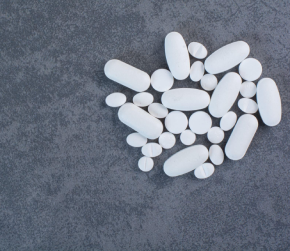
The transition of the traditional tablets to superior drug delivery systems in the current pharmaceutical formulation has been influenced by the necessity to achieve improved efficacy, safety, and compliance in patients. These innovations have included the pellet-based dosage forms which have become very prominent. Pellets are tiny, dry, spherical particles that may be placed in a capsule or pressed into a multiple-unit pellet system (MUPS) tablet. Pellet formulations are more flexible and perform better compared to traditional tablets, thus are more favored in most therapies.
Our Story
Since its creation in 2017, Srinag Pharma has grown to become a prominent pharmaceutical pellet, micro-pellet, and granule manufacturer in India, with its state-of-the-art, GMP-certified plant located in Hyderabad. Scientific excellence and innovative technologies, which make us special, are supported by a strong commitment to R&D, which produces complex generics, such as modified release, MUPS, and nano products.
In addition to manufacturing, we provide end to end contract formulation development, analytical services and regulatory support, collaborating with international customers on flexible business models, including bulk supply, joint venture and out-licensing.
What Are Pharmaceutical Pellets?
Pharmaceutical pellets are multi-particulate systems that generally have a diameter of between 0.5 and 1.5 mm. They are manufactured by extrusion-spheronization, layering or spray drying. The pellets are meant to be taken as a single unit of drug delivery, and when combined they deliver the intended dose. Pellets disperse all over the gastrointestinal tract and unlike single-unit tablets, provide a more uniform release and absorption of drugs.
Improved Drug Release Control
Controlled and Modified Release:
A major reason that pellets are more preferred is their capability to offer controlled, sustained release or delayed release of drugs. Using various coating formulas, manufacturers are able to develop formulas that can release the drug at a certain rate or in a certain area of the gastrointestinal tract.
Less Risk of Dose Dumping:
In tablet preparations, particularly sustained-release preparations, destruction of the tablet can cause dose dumping, or a massive release of the drug at the same time. The pellets reduce this risk since the drug is broken into many small parts so that it is released more safely and in a more predictable way.
Improved Bioavailability:
Pellets have a high bioavailability because they are spread uniformly in the gastrointestinal tract. Pellets diffuse unlike tablets that can be left in a single place, thereby enhancing the absorption area. This homogenous distribution causes less variability in drug absorption and more predictable therapeutic effects. Pellet systems are especially beneficial to drugs with a small absorption window.
Less Gastrointestinal Irritation:
Some drugs are capable of irritating the stomach lining when they are released in large amounts. Pellets are used in order to counter this problem by spreading the drug over a greater surface area and thus eliminating local irritation. Moreover, enteric-coated pellets may avoid the stomach and deliver the drug to the intestine, further safeguarding the gastric mucosa and enhancing tolerability.
Flexibility in Formulation
Combination of Multiple Drugs:
Pellet systems can also be used to combine several drugs in one capsule, with the release profile of each pellet being different. This is hard to come by using ordinary tablets.
Different Release Profiles:
Release profiles can be customized whereby the same dosage form can be coated in different ways, allowing immediate release, delayed release, and sustained release in a single product. Such personalization is a significant benefit of contemporary treatment.
Improved Patient Compliance
Ease of Swallowing:
Pellets can be placed in capsules or sachets, which can be broken and sprinkled on food. This is specifically helpful in pediatric and geriatric patients who might experience some difficulty in swallowing the pills.
Fewer Side Effects:
Pellet formulations also can lead to fewer side effects by regulating the release of the drugs and reducing irritation, which leads to increased adherence to treatment regimens.
Uniform Distribution in the Gastrointestinal Tract
Pellets are multi-unit systems unlike tablets that are single-unit systems. Once they are administered, they are distributed across the gastrointestinal tract, eliminating variability due to the emptying time of the stomach. This even dispersion maintains uniform drug release and absorption, irrespective of physiological variations among patients.
Greater Stability of Drugs
Pellet formulations may increase the stability of the drugs, particularly those that are vulnerable to environmental factors like moisture, light or pH. Individual pellets can be covered with protective coatings that protect the drug against degradation. This is especially crucial to acid-labile medications that must be enteric-protected.
Manufacturing Advantages
Scalability and Reproducibility:
The current methods of pellet processing like fluidized bed processing and extrusion-spheronization are highly scalable and can be used to produce uniform products.
Less Risk of Defects:
Tablets have problems such as capping, lamination and cracking. Pellet systems minimize such risks, as they are made up of a series of smaller units as opposed to a single compressed mass.
Flexible Processing:
Pellets can be coated, mixed, and stuffed in many ways, which offers versatility in the production and product development.
Improved Dose Uniformity:
Each pellet has a fraction of all drug doses and when they are added together they guarantee consistency in dose. This minimizes chances of variability that can be experienced during tablet compression. A small number of damaged pellets do not affect the dose significantly, enhancing safety and reliability levels.
Reduced Food and pH Effects
Pellet preparations are not sensitive to food intake and changes in the pH of the stomach. They are multi-unit in nature hence they perform in a similar way in varying physiological conditions. This renders them especially appropriate in drugs that demand specific release conditions to be met.
Challenges and Considerations
Complex Process of Manufacturing:
It involves specialized equipment and skills.
Increased Costs of Production:
The cost is high compared to traditional production of tablets.
Coating Precision:
It can be a technical challenge to achieve consistent coating of all pellets.
Nevertheless, clinical and therapeutic advantages of pellet-based systems usually overcome these issues.
Conclusion
In contemporary pharmaceutical production, pellets have grown to be a better substitute to the conventional tablets. They are very useful in advanced drug delivery systems due to their ability to deliver drugs in a controlled release, increase bioavailability, minimize side effects, and enhance patient compliance. Although the production process could be more complicated, the benefits of safety, efficiency and flexibility make the pellets one of the technologies defining the future of pharmaceutical formulations.